


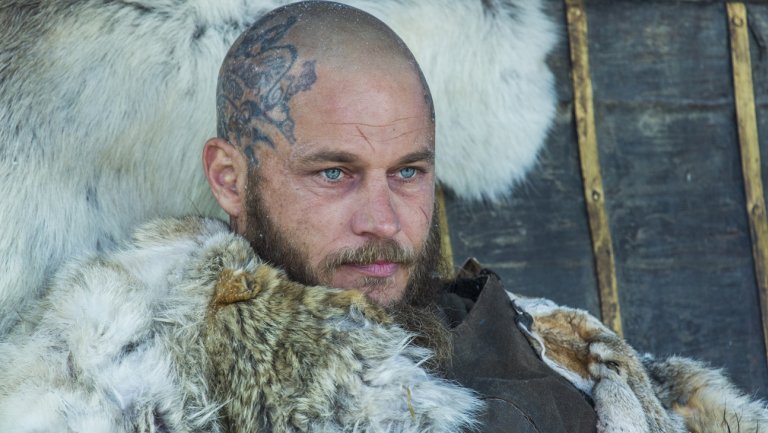
Introduction:
Historical evidence as to the existence of Ragnar Lothbrok is debatable. What information can be gathered about the legendary Viking king comes from Old Norse literature as well as the sagas. Although he is associated to be multiple characters ascribed with the name Ragnar Lothbrok, it is for certain that his legacy had changed how Anglo Saxon England looked in the early Medieval ages.
Ragnar Lothbrok’s poems and sagas:
The historical evidence of the existence of Ragnar is intertwined with the poems and sagas written about him centuries later. Ragnar, alongside his brother Rollo who later became the creator and first Duke of Normandy, became loosely famous in Scandinavia due to their successive raids in the Baltics as well as what is today Russia and Ukraine. According to Christian Danish chronicler Saxo Grammaticus, Ragnar was a son of the legendary Swedish king Sigurd Hring, yet no mention is given to him having another son, leading to claims that Rollo was a half brother to Ragnar.

His first marriage was to the shieldmaiden Lagertha, who is associated to be a humanized version of the Norse deity Thorgerd. To have her hand in marriage, she set a challenge for Ragnar before he could enter her home and win her love. A dog and a bear were her home guardians, and Ragnar had to kill the bear with a spear, and choke the hound with his hands. With her she had one son named Fridleif as well as two daughters that have no sources ascribed to them. Their marriage was short lived, as Ragnar was called back to Denmark to quell a civil war, where he fell in love with Thora Town-Hart. Daughter to Swedish king Herradur, to win her hand in marriage Ragnar was tasked to completing various adventures, most notable was the one that gave him the nickname Lothbrok, meaning hairy breeches. In the tale of this adventure, he was acquired to kill a lindworm serpent that grew to large proportions given to Thora by her father when she was a child to protect her. Soaking his breeches in tar and sand, they would offer immunity to poison, and paired with a spear and shield allowed Ragnar to claim her hand in marriage. With her, he had two sons by the names of Eric and Agnar, who perished in the civil war that once more beset upon Denmark, with Ragnar being rescued after calling aid from Norway that came in the form of his previous wife Lagertha. Ragnar once more married, his third wife being the volva or Nordic shaman named Aslaug, who was the daughter of Scandinavian hero Sigurd, and shieldmaiden Brunnhilde who was a Valkyrie. Already famous by his exploits, he requested Aslaug to come neither dressed, nor undressed, neither hungry, nor full and neither in company nor alone. Astonished by her beauty and wits, she happily married Ragnar and together they had many sons that became prominent historical figures in the Medieval Ages.

Those sons were Ivar the Boneless, given the name for a medical condition he was born with having brittle bones; Bjorn Ironside who acquired his nickname for wrestling a bear and choking it to death; Halfdan Ragnarsson and Ubba as well as Sigurd Snake in the Eye, who was born with an ouroboros, a snake devouring its tail, a mark in his eye. As his sons grew and came to maturity, alongside their father they became the plague of Europe. Raiding the Baltics, Russia, Ukraine, Anatolia, with France and particularly England suffering most of the troubles. It is speculated that Ragnar was the reason the Vikings beset upon the rich countries of Europe, searching for easy pickings as well as warmer and fertile land for them to settle. The infamous end of Ragnar’s story came not with the siege he conducted on Paris, nor with the various Anglo Saxon kings he toyed with and made alliances to have his entourage leave them in peace. He died at the hands of Northumbrian king Aella, being caught alive and thrown in a pit of snakes, resulting in an inglorious and dishonorable death of the legendary Viking hero.
Conclusion:
Although many notable historical characters of Viking origins in early Medieval ages were associated with Ragnar, they resulted in failure, suggesting that the legendary king did in fact exist. Debatable for his exploits and mere existence or not, it is for certain that his death had greatly angered his sons who already were kings and men of their own renown, sparking the creation of the Great Heather Army that descended upon Anglo Saxon England, forever changing its history.

