


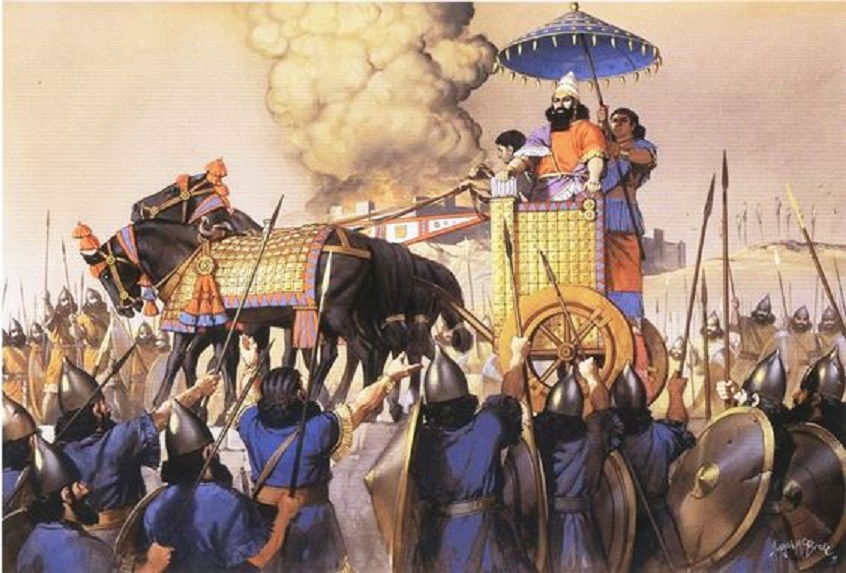
The Neo-Assyrian kingdom (934–609 b.c.e.) began with Ashur-dan II, who resumed regular military campaigns abroad after more than a century of neglect. He and his successors focused their attacks on the Aramaeans to recover areas formerly occupied by the Middle Assyrian empire. Adad-nirari II set the precedent for a “show of strength” campaign, an official procession displaying Assyria’s military power, which marched around the empire and collected tribute from the surrounding kingdoms. This monarch also installed an effective network of supply depots to provision the Assyrian army en route to distant campaigns.
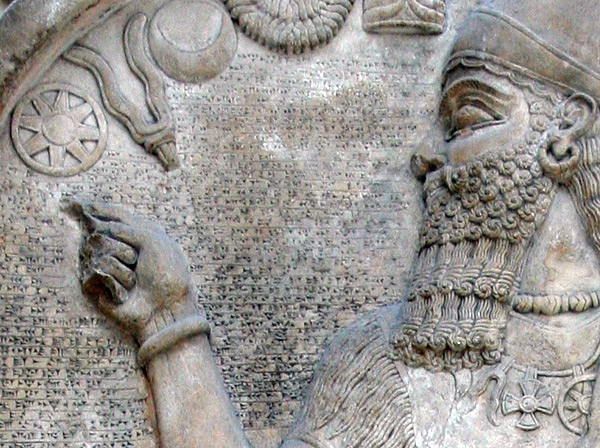
Ashurnasirpal II
Ashurnasirpal II has been considered the ideal Assyrian monarch, who personally led his army in a
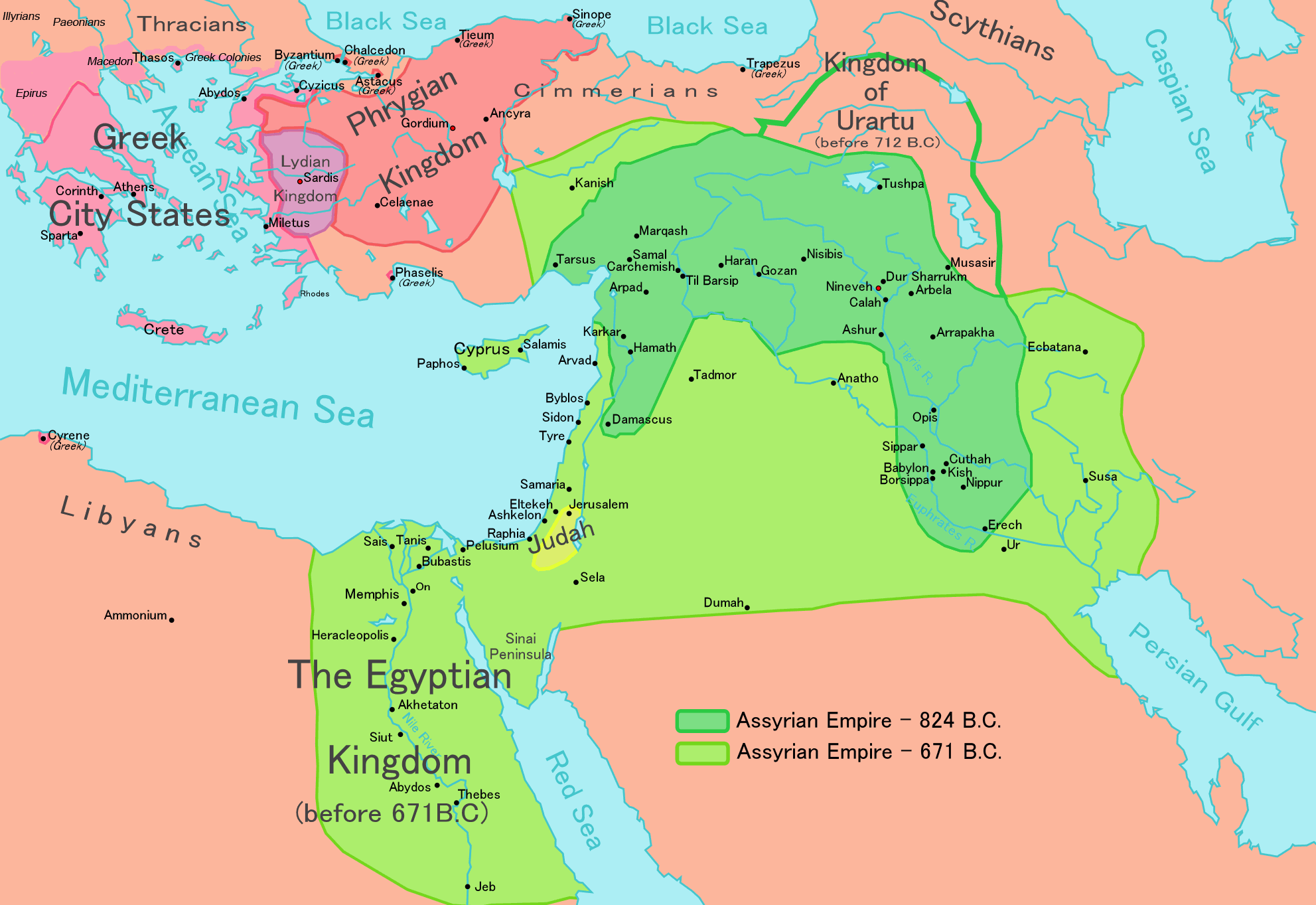
campaign every year of his reign. He subjected Nairu and Urartu to the north, controlled the regions of Bit- Zamani and Bit-Adini to the west, and campaigned all the way to the Mediterranean. Shalmaneser III continued his father’s tradition of military aggression. From his reign to Sennacherib’s (840–700 b.c.e.), the annual campaigns were so regular that they served as a secondary means of dating (i.e., the “Eponym Chronicle”). At Qarqar on the Orontes River in 853 b.c.e., Shalmaneser fought against a coalition led by Damascus, which included “[King] Ahab, the Israelite.”
Ideology of Terror
Under Ashurnasirpal II and Shalmaneser III military strategy was honed to great effectiveness: When
enemies refused to pay regular tribute, a few vulnerable cities would be taken and their inhabitants tortured by rape, mutilations, beheadings, flaying of skins, or impalement upon stakes. This “ideology of terror” was designed to discourage armed insurrection, lest Assyria exhaust its resources. As a last resort, however, the foreign state would be annexed as an Assyrian province.
The strategy of forced deportations was employed with reasonable success.
Tiglath-pileser III
For the next century Assyria experienced a decline due to weakness in its central government, as well as the military dominance of its northern neighbor, Urartu. Tiglath-pileser III (biblical “Pul”), however, restored prestige to the monarchy by curtailing the power of local governors. Instead of levying troops annually, he built up a standing professional army. Tiglath-pileser defeated the Urartians and invaded their land up to Lake Van. In the west an anti-Assyrian coalition was crushed, and the long recalcitrant Damascus was annexed. He also adopted a new policy toward Babylonia. The Assyrian monarchs had traditionally restrained their efforts to control Babylonia, in deference to the latter’s antiquity as the ancestral origin of Assyria’s own culture and religion. In 729 b.c.e., however, Tiglath-pileser established a precedent by deposing the Babylonian king and uniting
Assyria and Babylonia in a dual monarchy.
Shalmaneser V and Sargon II
Hebrew tradition credits Shalmaneser V with the fall of Samaria in 722 b.c.e., the very last year of his
reign. Two years later, however, Sargon II still had to crush a coalition led by Yaubidi of Hamath, who had fomented rebellion in Arpad, Damascus, and Samaria. The victory was depicted on relief sculptures in the newly founded royal city, Dur-Sharrukin (modern modern Khorsabad). After a prolonged struggle, including a defeat by the Elamites at Der (720 b.c.e.), Sargon eventually wrested the Babylonian throne from Merodach- baladan II. In 705 b.c.e., however, Sargon’s body was lost in battle, prompting speculation about divine displeasure. Sargon’s successor, Sennacherib, eventually decided to move the capital to Nineveh.
Sennacherib
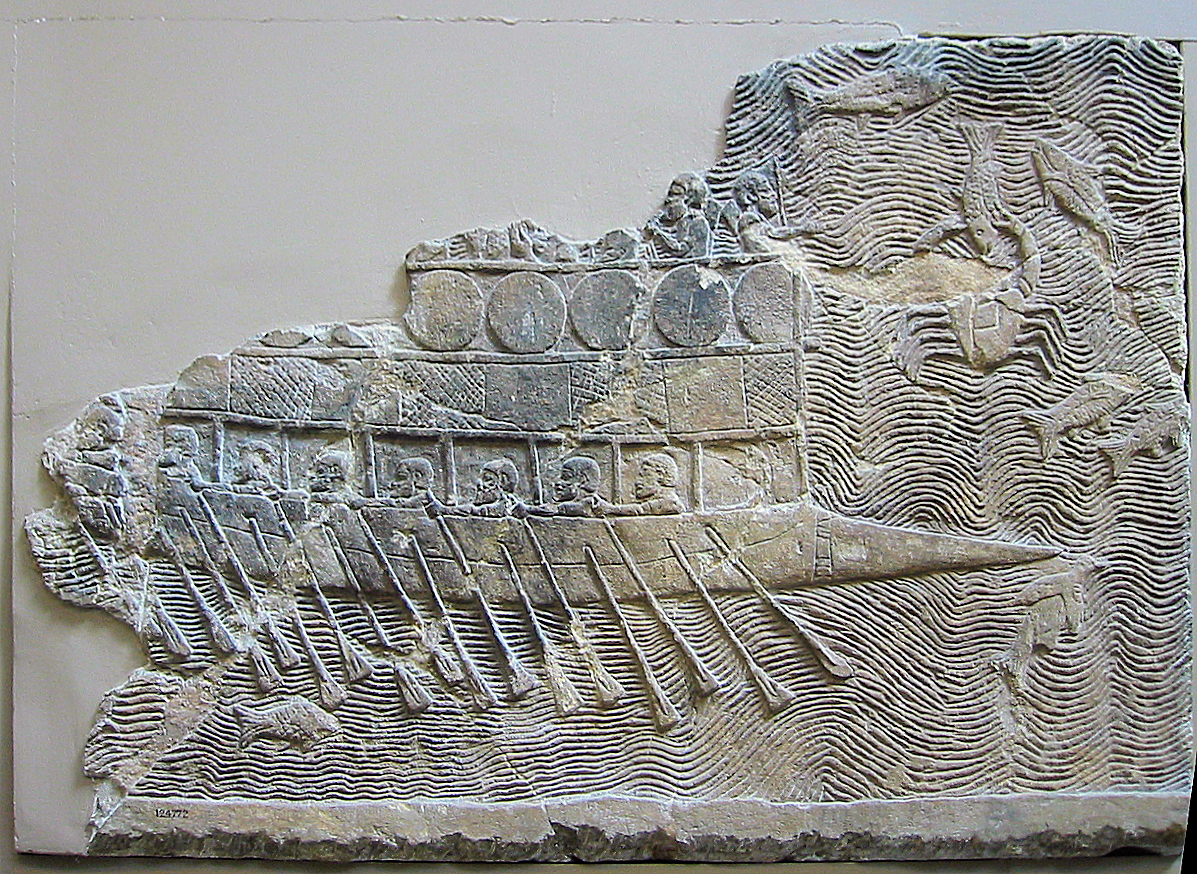
During his 701 b.c.e. campaign in Palestine, Sennacherib became the first Assyrian monarch to attack Judah. He also attempted various methods of controlling Babylonia. When direct rule failed, Sennacherib installed a pro-Assyrian native as puppet king. Thereafter, he delegated the control of Babylonia to his son, who was later kidnapped by the Elamites. Finally, in 689 b.c.e. he razed Babylon to the ground. Sennacherib was assassinated by two of his sons, a crime later avenged by another son, Esarhaddon. The latter was successful in his overtures to achieve reconciliation with Babylon. Esarhaddon may have overstretched Assyria’s limits, however, when he invaded Egypt and conquered Memphis in 671 b.c.e.
End of The Neo-Assyrian Kingdom
At his death Esarhaddon divided the empire between two sons: Ashurbanipal in Assyria and Shamashshuma- ukin in Babylonia. Egypt proved troublesome to hold, and Ashurbanipal eventually lost it to Psammetichus I. Moreover, civil war broke out between Assyria and Babylonia. The Assyrians conquered Babylon by 648 b.c.e. and invaded Elam, which had been Babylon’s ally. Although successful, the civil war had taken its toll on Assyrian forces. Also, the crippled Elam was no longer a buffer between Assyria and the expanding state of Media. In 614 b.c.e. the Medes conquered the city of Ashur. Two years later, in coalition with the Babylonians and Scythians, they overthrew Nineveh. The defeated Assyrian forces fled to Haran, but the allied armies pursued them there and effectively ended the Neo-Assyrian kingdom in 609 b.c.e.


