


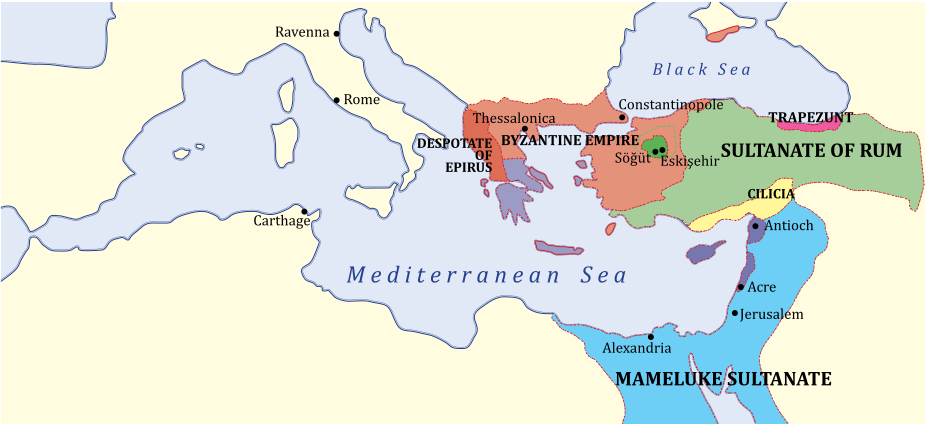
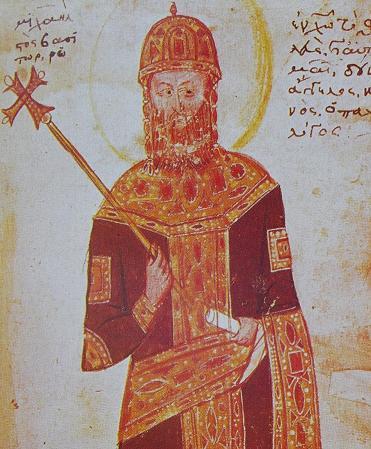
Michael VIII (1261-1282) was Byzantine emperor, an ambitious and unscrupulous usurper, he founded Byzantium’s last dynasty.
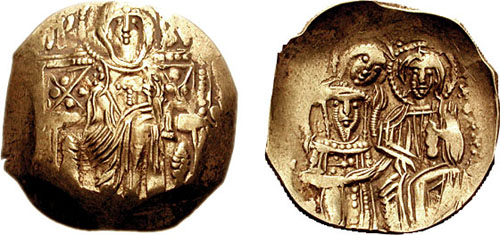
Belonging to one of the most powerful Byzantine aristocratic families, Michael rose to prominence under the Lascarid rulers, who had built, in the Empire of Nicaea, the chief of the Greek successor states after the Fourth Crusade captured Constantinople. The Lascarids’ ultimate goal of restoring Byzantine government in Constantinople had eluded them up to the accession (1258) of the last of the family, John IV, a boy of 8. A restless and untrustworthy noble, Michael had several times outraged John IV’s father and grandfather with his machinations. But he was popular with the other aristocrats. Michael soon had himself made the young emperor’s guardian; he was then given the title of Despot, and, by the beginning of 1259, he was finally proclaimed emperor. Thereafter, he systematically pushed John IV into the background.
Ruthless in seeking power, Michael was able in exercising it. In the autumn of 1259, at the important battle of Pelagonia, his armies defeated the dangerous coalition of King Manfred of Sicily, the Latin prince of Achaea, and Michael’s Greek rival, the despot of Epirus. Then, in July 1261, by unexpected good luck, one of his generals succeeded in slipping into Constantinople and expelling the Latin regime. So Michael achieved the glorious Byzantine restoration in the old capital, which he entered triumphantly on Aug. 15, 1261. Having himself recrowned there, he associated his son with him in power, and at the end of the year had little John IV blinded, thus completing the Palaeologan replacement of the Lascarid house.
Michael was determined to recover old Byzantine territories in Europe, especially in the Peloponnesus, from the Latin regimes there. Western leaders, regarding Michael as a schismatic as well as a usurper, wished to drive him out of Constantinople. After numerous diplomatic shiftings, a powerful new Western coalition against Michael was organized in 1267 by the Treaty of Viterbo between the Pope, the former Latin emperor of Constantinople, the Latin prince of Achaea in the Peloponnesus, and Charles of Anjou. Taking advantage of hostility toward Charles of a new pope, Gregory X (reigned 1271-1276), Michael cultivated the Pontiff as a buffer to Angevin ambitions. But the Pope’s price was the submission of the Eastern Church to Rome in full union. Michael was forced to accept an official union dictated at the Council of Lyons (1274). This union with the hated Latins provoked uproar and factionalism among his subjects. The Emperor was therefore forced to forestall implementation of the union, and the pro-Angevin pontiff Martin IV renewed papal support for Charles and his allies against Michael. With disaster in the offing, Michael pulled his last diplomatic trick by helping to promote the “Sicilian Vespers” rising of 1282, which expelled the Angevins and introduced Michael’s ally Pedro III of Aragon (reigned 1276-1285) as ruler of the island. Charles’s power was shattered as a result, and he died in 1285, his ambitions against Byzantium unrealized.
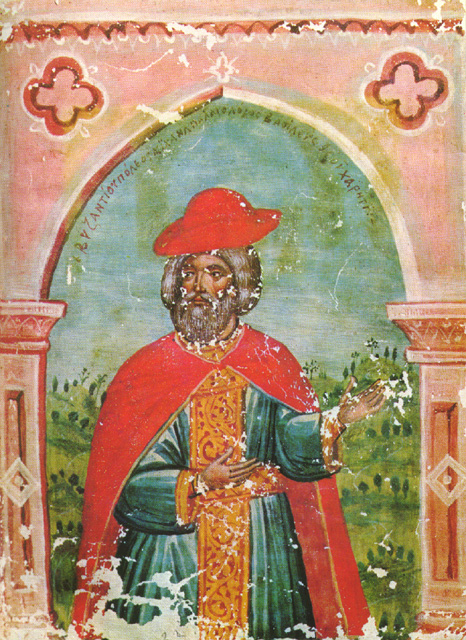
Meanwhile, Michael’s forces continued to make progress in the Peloponnesus, widening Byzantine power there. But his fears of the independent aristocrats, who were the bulwarks of the Eastern frontiers, only further weakened the Byzantine position there and opened the way for subsequent Turkish expansion during the next century. In his internal policies Michael attempted to restore the economy, but his heavy expenses for his diplomacy, wars, and rebuilding of Constantinople placed such strains on the revenues that a drastic cutback was required under his son and successor, Andronicus II, who was also obliged to heal the fierce ecclesiastical strife which Michael’s hated Church policies had enflamed. Michael died on Dec. 11, 1282, while campaigning in Greece.

