


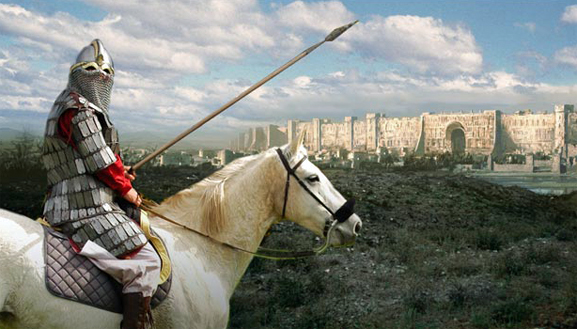
In 633 the forces of the newly established Rashidun Caliphate moved into Sassanid Mesopotamia and captured village to village eventually moving into the Sasanian Province of Asoristan and capturing the important defensive site of Nahavand, with these gains essentially assured Rashidun victory over the Sasanian Dynasty of Iran.
With the fall of the Sasanian Dynasty and the subsequent loss of Roman territories to the Caliphate changed the region forever, however, Iran was not entirely under the thumb of the Rashidun as successor states arose in Mazandaran (Modern Tabaristan) & would last for a good few centuries before finally being annexed by the Caliphate, most if not all of the remnants of the Sasanian legacy continued in Mazandaran (Modern Tabaristan). This article will introduce you to usually ignored legacy of the Sasanians and their direct successors, whether through politics or through bloodline.

Relatives of Yazdegerd III and the continuation of the house of Sasan
With the death of Yazdegerd III in Merv, 651 CE came the end of the Sassanid Empire, however many of the Sasanian court survived along with direct descendants of Yazdegerd himself, including his son Peroz. Peroz, his family and the court Nobles safely made it to the Tang capitol and quickly established themselves in the Tang Court, Peroz later established a Governorate of sorts under Tang authority ( level of autonomy is not discussed by sources), the exiled Sasanian government was a launching pad for invasions into Arab held Khorasan however this ultimately failed. Peroz’s son Narseh would continue this policy of aggressive ardour against the Arabs until his later years where he would travel back to the Tang court and die of a Disease, the Sasanian dynasty continued for some time and would not be disturbed in china until the An Lushan Rebellion, it is even suggested by some Scholars and Archaeologists that members of the Sasanian family reached as far as Japan.
While the bulk of the Sasanians (and family relatives) fled to China, many remained, either as Governors or officials under the Rashidun or as rulers and Nobles of Independent Kingdoms that resisted Rashidun authority, many of these Kingdoms are mentioned in this article.
Dabuyids
The Dabuyid Dynasty came to being in 642 during the chaos of the Rashidun-Sassanid war, while the Sassanid Empire was falling apart, the founder of the Dabuyid Dynasty, Gavbara, secured Mazandaran. This consolidation was enough to resist the Arab assaults and negotiate a peace settlement for a time, the Dabuyids witnessed the end of the Sasanian Empire and the rapid expansion of the Caliphate, however the peace did not last and Farrukhan ‘the great’ was at the forefront leading successful defence of the region.
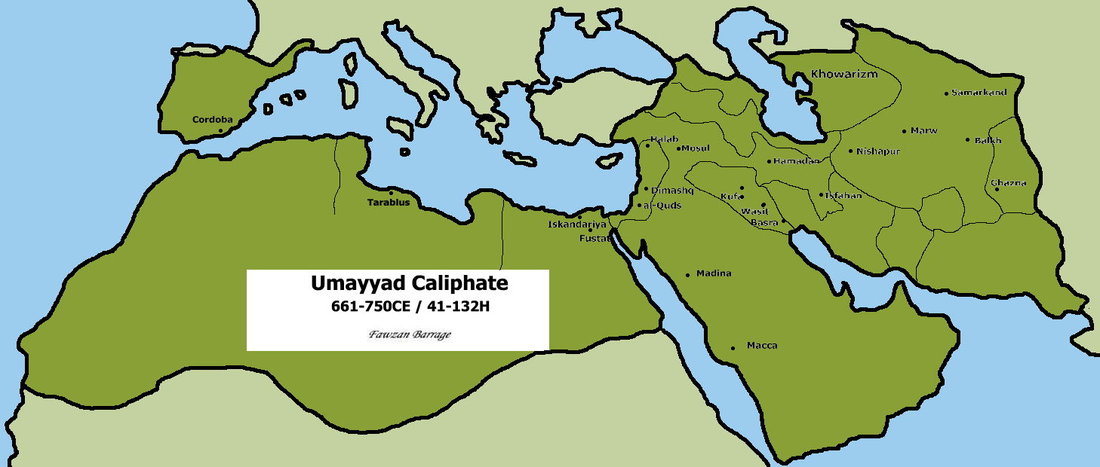
While for a time the Dabuyid Dynasty enjoyed prosperity, it would clash again with the Arabs over their Vassal status and after the Dabuyid ruler Khurshid attempted to gain territories during the Abbasid Rebellion. Khurshid faced a full Arab invasion force and was unsuccessful in defending the Kingdom and retreated to Gilan and poisoned himself, ending the Dabuyid Dynasty.
Karinid/Qarinvand Dynasty
The Karinid Dynasty was established around the 550’s thanks to Shah Khosrau, the Karinid’s were one of the many Parthian Clans that administered the Sasanian Empire along with other notable Parthian Clans & the House of Sasan, the Karinid’s managed to keep hold of their lands while the Sasanian Empire disintegrated, around 760 the Dabuyid Dynasty fell and the Karinid’s and their Bavandid counterparts allied in order to repel the Arab advance. In 768 a neighbouring Abbasid Governor was founding settlements near and inside Karinid & Bavandid territories, as such the two Persian Dynasties combined efforts to eliminate these attempts at Islamization, in roughly 815 the situation became more interesting when the Abbasids asked for Karinid and Bavandid military support in their war against the Byzantines, while the Bavandid’s declined, the Karinid’s accepted and as such were successful in fighting the Byzantines and gained favour from their Abbasid Overlords. While in the short run this strengthened the Karninid’s position it would ruin relations with the Bavand Kingdom as the Bavand ruler Shahriyar became jealous of the Karinid’s, this would culminate into a Bavand-Karinid war were the Karinid’s territories would be enveloped by the Bavandid’s in 817, however this changed when the Karinid ruler Mazyar went to the Abbasid court and acquired military aid as a result successfully reclaimed the lost Karinid territories. The Karinid Dynasty would fall from its long standing position as rulers of Tabaristan when they were defeated by the Tahirid’s and Bavandid’s around the 900’s and the Karinid’s became a vassal state where historical records come to an end.

Conclusion
As this Article portrays, Iran was never fully integrated into the ever changing face of the Caliphate, Mazandaran/Tabaristan remained Arab free and largely Zoroastrian for centuries. Countless Iranian based nations came from the ensuing chaos of the Arab conquest and the later ‘Iranian Intermezzo’ where Kingdoms such as the Ziyarid’s came to being.

