


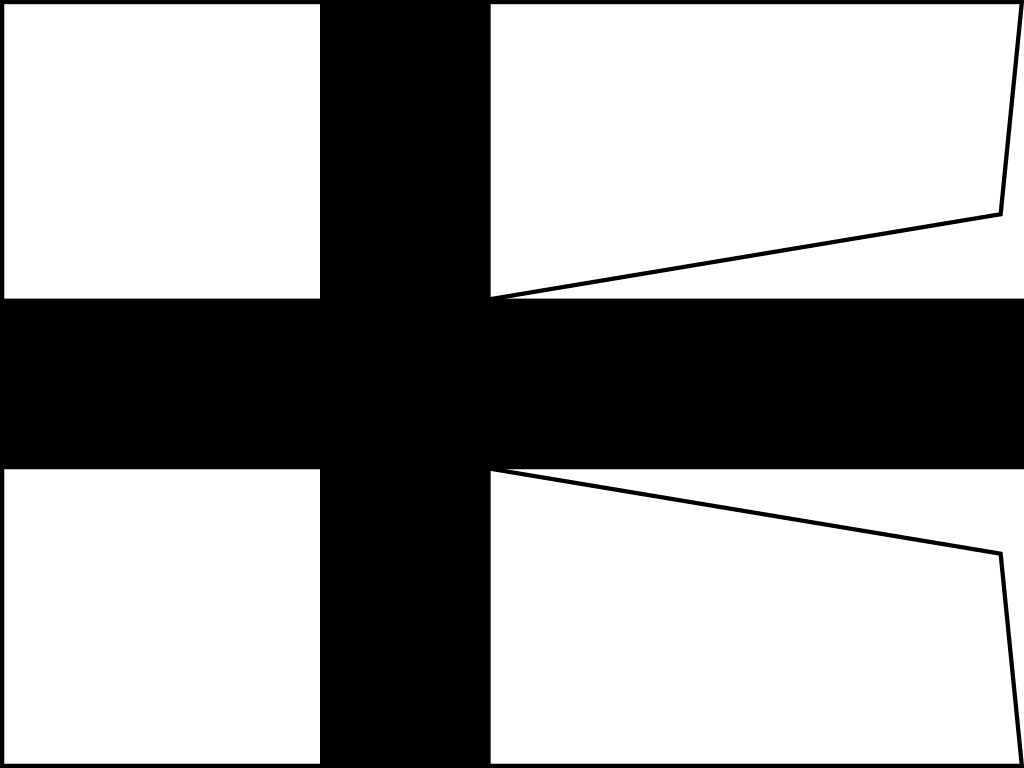
The history of the Teutonic Order began in Palestine during the 3rd crusade in 1190, when German pilgrims, led by chaplain Conrad and canon Voorhard, established a hospital for sick and wounded compatriots near the Syrian fortress of Akra.
According to another version, the hospital was founded by German merchants from Lübeck and Bremen, who following the example of other military-religious orders that had arisen during the First Crusade, organized a fraternity at their own expense, which was designed to help the poor and sick Germans. Duke Friedrich Schwabsky accepted this fraternity under his protection and petitioned the papal letter in his favor. This brotherhood subsequently gained a military character and became known as the Teutonic Order.
At first, this hospital fraternity was part of the structure of the Order of the Hospitallers (Johannites), and its head was the “Master of the Hospital” (Der Meister des Lazaretes). However, from the very beginning the Germans preferred to keep apart from other nationalities, and soon the hospital fell under the patronage of the Church of St. Mary in Jerusalem.
On February 6, 1191, Pope Clement III established the “Germanic Brotherhood of St. Mary in Jerusalem”, which was transformed from a hospital into a spiritual-knight order on March 5, 1196 for the successes of German crusaders led by chaplain Conrad. The masters of the Hospitallers and Templars, as well as the secular and clergy of Jerusalem attended the reorganization ceremony at the Temple of Acre. On February 19, 1199, Pope Innocent III, with his bull, granted autonomy to the society with its own charter.
This is how the German monastic knightly order of the Teutonic House of St. Mary in Jerusalem arose the tasks of which were: protecting German knights, treating the sick, and fighting the enemies of the Catholic Church. The Order was subservient to the Pope and the Emperor of the Holy Roman Empire.
The Order in Eastern Europe
In 1190, after the foundation of the order in Acre, Count Boppo von Wertheim, with the consent of the church, placed the order in 1212-1220 in the town of Eschenbach. Comrade Eschenbach formed in 1305, from 1305 to 1315, came into command in Nuremberg. Then, after numerous exchanges, purchases and donations, the Order became the sole owner of Nuremberg.

By the 1210s, the influence and wealth of the Teutonic Order was noticed by many powers wishing to deal with fragmented feudal groups under the banner of the “fight against pagans”. The then head of the order, Hermann von Saltz, who had considerable possessions and became a prominent intermediary of the Pope, had a great influence. In 1211, King Andrew II of Hungary invited knights to help fight the Polovtsy. The Teutones were located on the southeastern border of Transylvania, in Bourzenland, and gained considerable autonomy. By 1220, they built five castles: Marienburg, Schwarzenburg, Rosenau, Kreuzburg and Kronstadt – these were later named castles in Prussia. These castles became a springboard for the conquest of the practically uninhabited Polovtsian steppes. At the same time, the order ignored the rights of the local bishop and refused to share the loot with influential people from the nobility, who earlier claimed rights to these lands.
In 1225, Pope Honorius took the lands of the Order in Transylvania under his protection, with the result that Burtsenland became the feud of the Holy See, which was to make these territories independent of the Hungarian king. However, the envy of the Hungarian barony for military successes and privileges of the Order led to the fact that in 1225 the king demanded that the knights leave his land. Only an insignificant part of them remained in Transylvania, joining the Transylvanian Saxons , who constituted the noticeable German stratum that existed until the expulsion in 1945. The Hungarians did not replace the knights with comparable garrisons and did not continue the attack on the Polovtsy, allowing the latter to regain their confidence and regain strength.

