


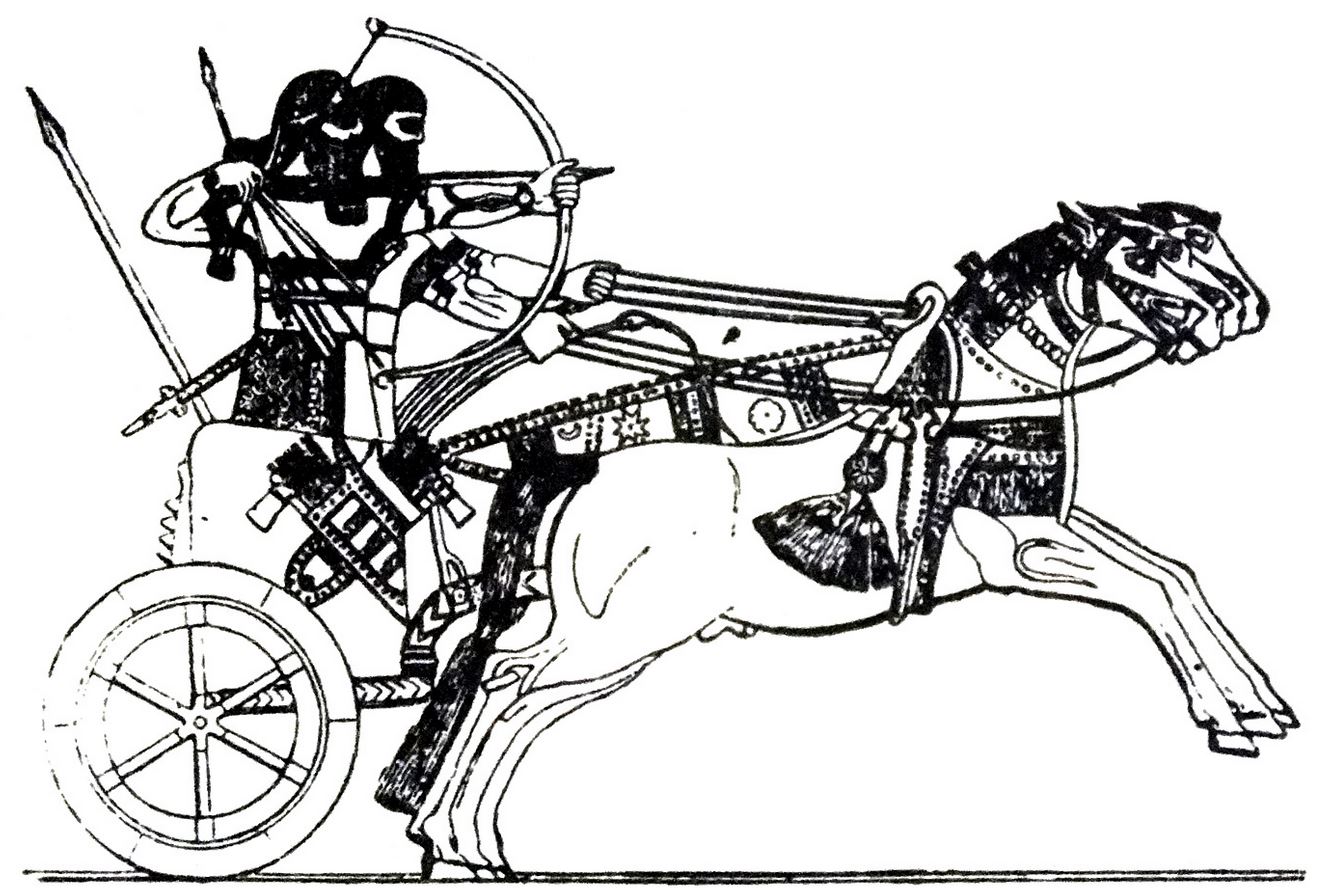
Chariot – a large two-wheeled carriage uses as a driving force race animals. The chariot during the development of military thought, starting from 2000 BC, has become one of the decisive factors in the conduct of hostilities.
The earliest recorded stage of the use of chariots is the Sintashta culture – 4100 years ago. The chariots were as lightweight as possible, for less stress on the wheels. Could travel very fast at that time – about 40 km per hour. They were used to protect herds of animals and for reconnaissance. As a drover, usually one person acted. In the event of a military situation, there could be two – one drove horses, the other threw metal spears and darts, or shot from a bow.
The reconstruction of the stages of the battle on the chariots, led to the conclusion that the chariots were never used as a kind of “tanks of antiquity.” They did not ram the enemy infantry, did not try to break the continuous formation of spearmen, swordsmen and soldiers holding shields. Also on chariots did not try to ram densely standing people. Drawing analogies with modern military equipment, the chariot was like a infantry fighting vehicle – the chariots entered the battle first, they accelerated strongly and rode towards the enemy ranks, then at a distance of a shot from a bow or throwing spears and darts, they turned sharply and rode along the enemy’s formation, hitting him with weapons. The high speed of the chariots allowed them in a high degree of probability not to be hit by retaliatory shots of the enemy. Chariots were also used to deliver urgent messages in the battle, to transport wounded soldiers,for a relatively massive and quick transfer of infantry from one battlefield to another, for the movement of army commanders.
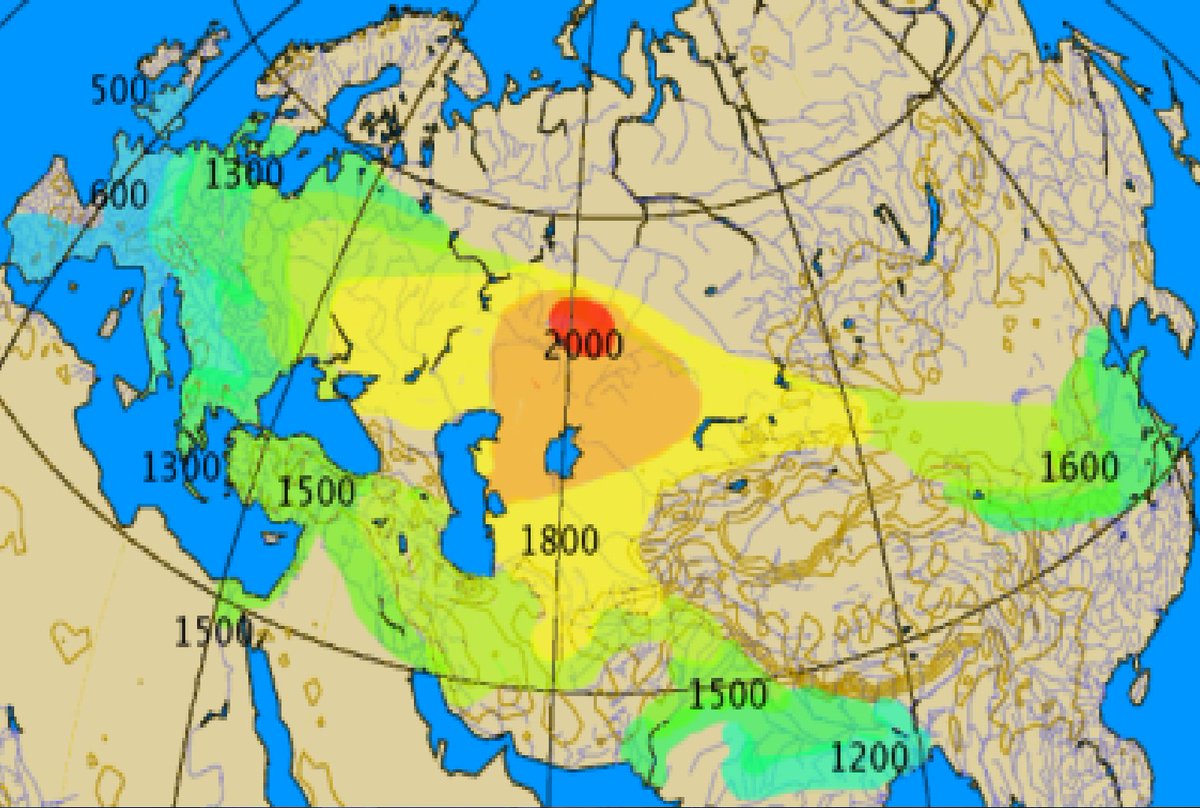
Given that the ramming of the enemy infantry with chariots was extremely dangerous, due to the fact that the infantry would almost certainly kill both horses and people in the chariot, this tactic was not widely used. However, during the period of the Persian state, tactics were mastered, when a heavy version of the chariot was dispersed and sent to the enemy’s system, while the horse-driving man jumped to the ground in advance and retreated. The chariot flew into the ranks of the soldiers and inevitably after that disappeared as a combat unit. However, while she was stopped, the chariot could cripple or kill a certain number of soldiers.
The number of chariots in the armies could vary greatly. In China and India, one chariot per 100 soldiers. In Assyria – by 200. In Egypt, the end of the II millennium – by 50. In the army of Carthage – even one for 20 soldiers. There are indications that the Hittites accounted for even 10 people, but this is unlikely.
Chariots in their time were quite expensive and high-tech products. In Assyria there was a royal factory for the production of chariots, and strategic materials were brought from all over the world known to the Assyrians. Only at the cost of such costs was it possible to combine the strength of the structure with its lightness, which allowed it to accommodate three people in the back, instead of 1-2 for less skilled peoples.
Tactics
Over the centuries, the infantry has developed methods of protection against attack by war chariots. In the era of the diadoch, the defensive tactic of the phalanx was that the hoplites parted, passing the chariot to the rear, where it became the prey of auxiliary units (this technique was facilitated by the fact that the charioteers jumped from the chariots before they reached the enemy system, and the chariot remained uncontrollable).
The Romans since the time of Julius Caesar have also developed effective methods to counter chariots. In the battle of Magnesia, the attack of the seronos chariots of the Seleucid king Antiochus the Great was successfully repulsed by the soldiers of L. Cornelius Scipio.
Thus, the actions of well-trained infantry using the vulnerable sides of this type of weapon made it possible not only to defend themselves against chariots, but also to force them to inflict serious damage on their own troops. This circumstance practically eliminated the combat value of the sickle-chariots by the end of the Hellenistic era.

Reason for their fall
1.Initially, domesticated horses were too short, stocky for the rider to confidently ride on them and fight against other people. The horses most likely bred from the tarpan subspecies had a long selection, hundreds of years old, before their growth, strength, and strength of the back were allowed to ride the rider with weapons for a long time. The chariot was, starting from 4100 years ago and up to 3000 years ago, in fact the only way to use the main qualities of horses - a relatively long duration of high speed and high speed of movement. When the selection of horses reached the desired level, people began to actively learn the function of a rider, abandoning chariots.
2.A chariot is an expensive unit. Starting from the Sintashta chariots, they were made of several types of wood; to process it, a high-quality tool was required, the presence of experienced craftsmen in several narrow specialties — the manufacture of wheels, axles, and bodies of good quality. 3.All this required huge labor costs and funds for those times, given that the entire instrument was at best made of bronze.
Chariots, in comparison with cavalry, are much less maneuverable, require more horsepower to move and therefore have a less guaranteed range and a lower average speed.
4.The chariot, due to the fact that it has parts that experience constant shock loads and friction, breaks down and requires repair, and this complicates its use in the field, in isolation from repair shops and good craftsmen.
These factors led to the relatively rapid rejection of the advanced armies of the world from chariots in favor of cavalry. At the same time, a number of peoples and rulers continued to try to use them as combat units, however, the effectiveness with each new battle steadily declined.
Sources:
Military chariots  // Military Encyclopedia  : [in 18 vol.] / Ed. V.F. Novitsky
Military chariots // Brockhaus and Efron Encyclopedic Dictionary
Nefyodkin A.K. Origin and history of seronos chariots 
