


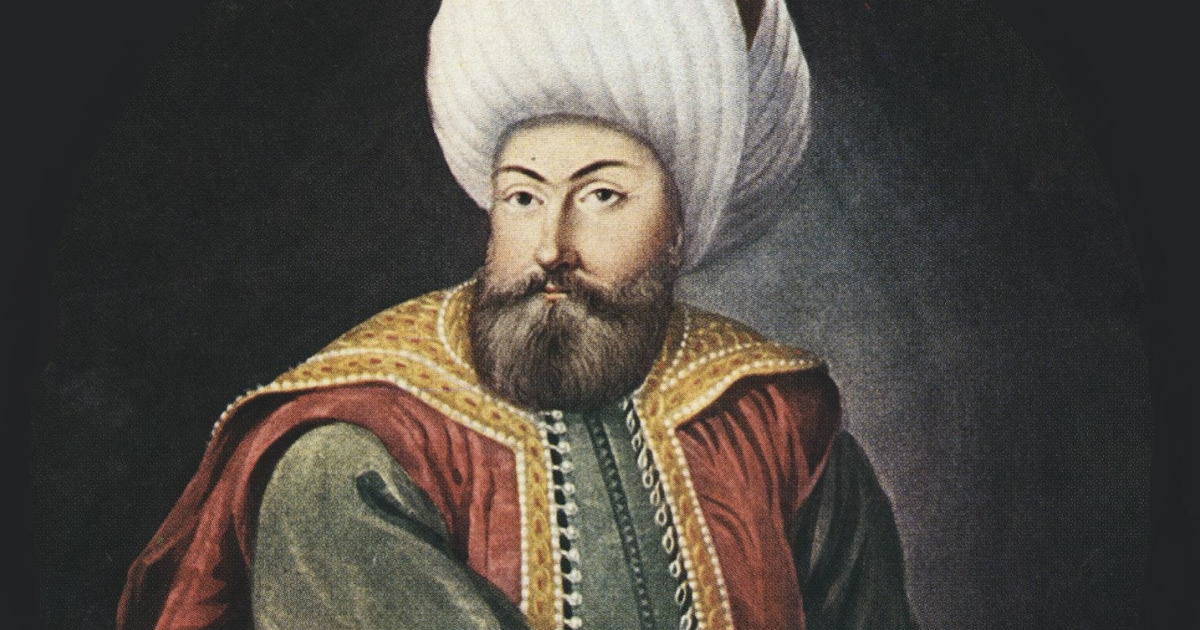
Osman I
Due to the lack of historical sources of Osman, very little factual information is known about his life. No documentary data about Osman’s mother has been preserved. Anthony Alderson points out that Osman I’s mother was allegedly a Turkish woman. Osman’s father was the legendary leader Ertogrul. There is no mention of him in the chronicles of that time, and only found coins with the inscriptions confirm his existence as a real person. After the death of Ertogrul, power passed to his son, Osman.
After the victory in 1303, the Ottomans became impossible to ignore. The Byzantine emperor Andronik II Palaeolog, seeking to create a reliable alliance against the growing threat, proposed one of the princesses of his wife’s house to the nominal overlord Osman, and then, after the death of Gazan, his brother. However, the expected assistance from people did not come, and in 1303-1304 Andronik hired Spanish Crusader adventurers from the “Catalan company” to protect their possessions from the further attacks of the Turks. Like most mercenary units, the Catalans acted at their own discretion, urging the Turkic soldiers (though not necessarily Ottomans) to join them on the European side of the Dardanelles. Only the alliance between Byzantium and the Serbian kingdom prevented the Turk-Catalan offensive.
Osman I, apparently, died in 1323-1324, leaving his heirs a significant territory in northwest Asia Minor.
Orhan I
Orhan I, having inherited the Ottoman beylik, transferred the capital from Sogut to the newly captured Bursa. Moroccan traveler Ibn Battuta reports that Orhan was the main and richest of several Turkish leaders, whose yards he visited during his stay in Asia Minor in 1330-1332.

In Byzantium, after the death of the emperor Andronicus III, a civil war began. Orhan I and Emir Aydin Umur Bey went to an alliance with the regent’s son Andronik John VI Kantakuzin, and Orhan married his daughter Theodore in 1346.
In 1350, another Venetian-Genoese war began, the subject of which was control over profitable trade in the Black Sea. Orhan I took the side of Genoa, supplying food to both its fleet and the commercial colony in Galata, and in 1352 he concluded a treaty with his allies. His troops also helped the Genoese when Galata was attacked by Venetian and Byzantine troops.
In 1352, at the invitation of John IV Kantakouzin, a detachment of mercenary soldiers, referred to in the chronicles as “Turks”, located in the Byzantine fortress Tsimpe on the north bank of the Dardanelles swore allegiance to the son of Orhan Suleiman Pasha, and the Ottomans acquired the first stronghold in the Balkans.
In 1354 an earthquake occurred, which destroyed the walls of Gelibolu and turned into to ruins a number of other cities on the northwest coast of the Sea of Marmara. This weakening of the Byzantine forces allowed the Ottomans to expand their presence in Europe.
The Byzantine Emperor John V Paleologue gave his daughter Irina to Khalil, who was the son of Orhan, in the hope that Khalil would inherit his father, and the Byzantine and Ottoman territories would unite. Under the Ottoman system, where all sons had theoretically equal chances for succession to the throne, such a possibility was viable. However, the plan failed, because the father’s place was taken by Khalil’s elder brother, Murad, whom his father made commander-in-chief on the Thracian border and who won the land in southern Thrace during his father’s lifetime.
Sources:
Caroline Finkel “The History of the Ottoman Empire

