


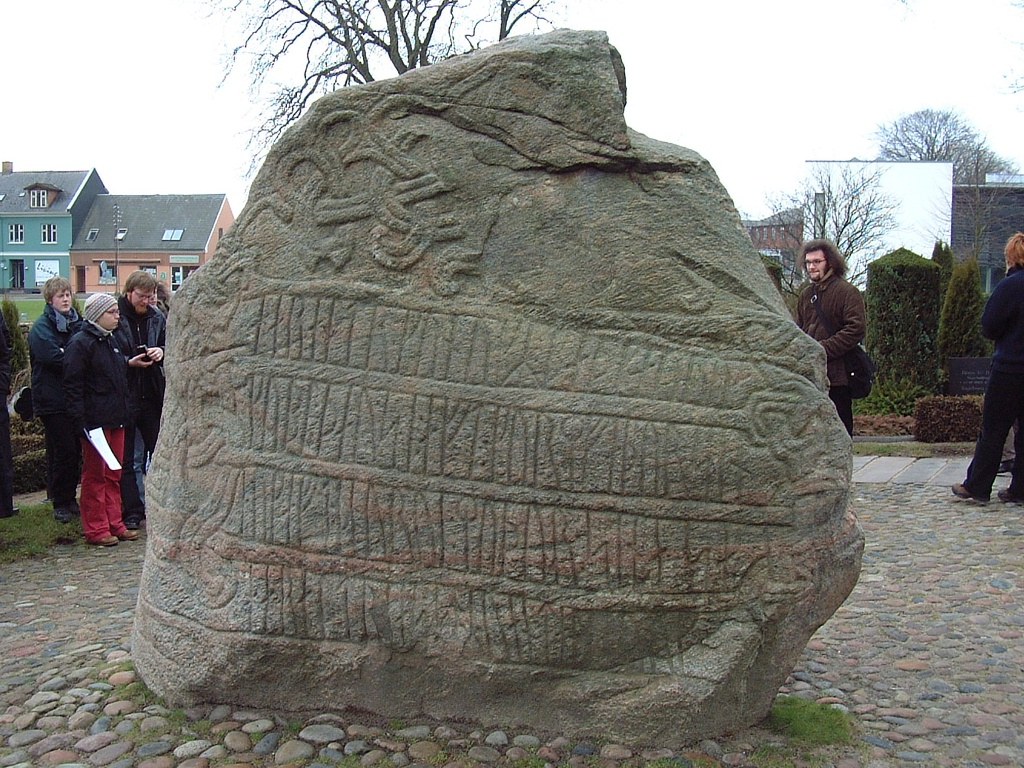
One of the main reasons for this change was the spread of Christianity after a stubborn and bloody struggle. Attempts to spread Christianity in Denmark began under Charlemagne, but the preaching of the Apostle of Scandinavia, Ansgaria (9th century), was unable to ensure the triumph of Christianity. Only the conquest of England, first by Sven and then by Cnut the Great (1018-1035), gave Christianity the opportunity to gain a foothold. Thanks to the protection of Cnut, the English preachers came to Denmark and were its first bishops.
Under Sveyn and especially under Cnut the Holy (XI century), the victory of Christianity was almost complete. At first, the Danish church depended on the archbishop of Bremen-Hamburg; but in 1104 the bishop of Lund was made archbishop, and the papal legate proclaimed the independence of the Danish church.
The union between the church and the kings, already under Cnut the Holy, led the clergy to segregate themselves into a rich and powerful class, which had large land ownership (in the 10th century – about ⅓ of the Danish territory) and was spared from the general court in all their religious affairs. In the XII century, many categories of cases were assigned to the department of the spiritual court; fines levied on these cases turned to the income of the clergy. An attempt by Cnut the Holy to establish a tithe in favor of the church led to the rebellion and the killing of the king, but it nevertheless ended in success.
By 1162, Archbishops Eskil and Absalon succeeded in getting the people to approve special laws for the church. The archbishop and the bishops were allowed to maintain an army, build fortified castles, mint their own coins. The clergy became the support of the kings, forcing them, in turn, to serve the interests of the church and suppress the opposition it encountered.

Constant wars with neighboring nations, mainly with the Vendians, and the aggressive policy of a number of Danish kings, aimed at Norway, Pomerania, Mecklenburg and England, inspired internal civil strife, and gradually created a number of significant changes in the tribal Danish system. Cnut the Great , who needed a properly organized military force, transformed the squad into a permanent army of from 3 to 6 thousand people. He was given the right of independent assembly and an independent court, as well as special legislation that distinguished him from the tribe. True, every free person could enter this army, but in fact the access was only possible for individuals who had the means toreceived these funds from the king. The latter, thanks to the established custom of counting empty and communal lands as property of the crown, he could easily give lands as a reward for service.
Under Valdemar I and his successors ( Cnut VI , Valdemar II), the distribution of flax took on an extensive scale, to which the example of Germany contributed a lot. By the end of the XII and the beginning of the XIII century, a special group of the so-called “royal people” was formed. All of them were exempt from natural service for the construction of fortresses, mails and roads and from military tax, along with other privileges, they received the right to buy and occupy as much land as they can. This is the law that initiated the creation of large landed property.
Sources:
O. Klindt-Jensen. Denmark before the Vikings
History of Denmark from ancient times to the beginning of the XX century

