


First Restoration
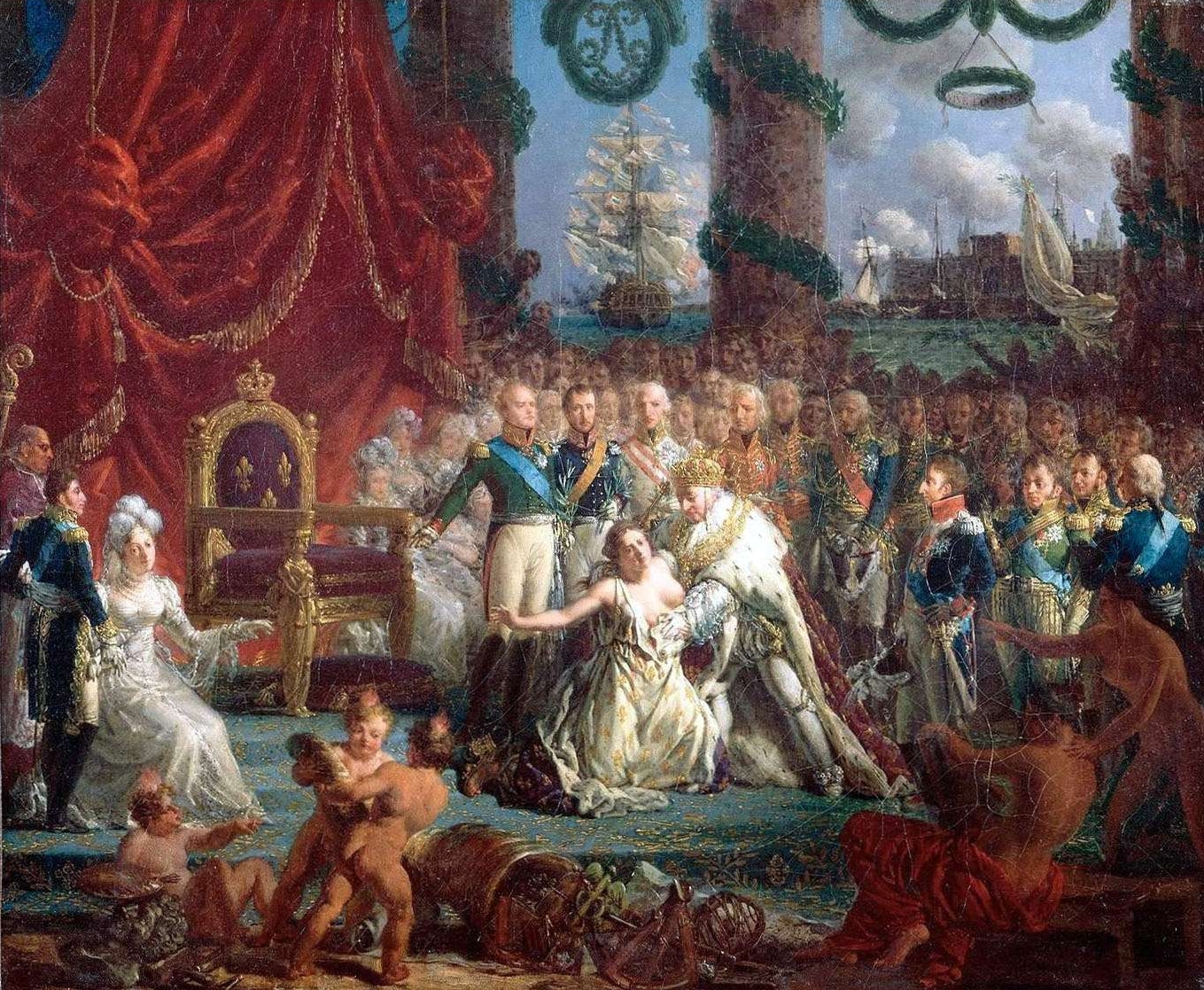
On April 6, 1814, the Senate, acting on the instigation of Talleyrand and at the request of the Allies, proclaimed the restoration of the Bourbon monarchy, where Louis XVIII sworn an oath of constitution by the Senate. The oath recognized the freedom of speech and religion, and alongside the hereditary Senate appointed by the Crown, the legislative body elected by the population was placed. Louis XVIII at first refused to obey the demand of the Napoleonic senate, but at the insistence of Emperor Alexander I, signed a declaration with the promise of a constitution, after which he solemnly entered Paris.
On June 4 of the same year, the Charter of 1814, enacted by the king, came into force; it represents the development of the Constitution on April 6. This constitution was not really observed; already in October 1814 the censorship for works of less than 20 printed sheets were restored, as well as the requirement of preliminary permission for magazines, printing houses and libraries.
Louis XVIII did not strive for a sharp break-up: he accepted the institutions of the empire, without introducing any serious changes in them. Mainly officials of the empire were preserved.
Lands confiscated by the revolution, but for some reason not yet sold, were given back to the returning emigrants. It became clear that the emigrants wanted to get back all the other lost property, even if they had passed into the hands of new owners.
Of great practical importance was also the removal from service or transfer to half the salaries of a significant number (over 20,000 ) of Napoleonic officers. The remaining officers and the whole army felt that the new government treated them with disdain.
The Napoleonic court nobility was also dissatisfied, although they were admitted to the new court, they felt constrained there. Grievances spread to the peasants as well, who feared the restoration of feudal law, even in incomplete force.
One Hundred Days

All this gave Napoleon the hope of regaining power. On March 1, 1815, he landed in the south of France, where he was greeted by an enthusiastically large part of the population – especially peasants, workers, petty bourgeoisie, soldiers and officers. Napoleon I quickly assembled a fairly significant army and moved to Paris. His personal despotism was forgotten and he was greeted as a representative of the revolution that was to liberate the country from the tyranny of the Bourbons. Louis XVIII fled, and Napoleon again became emperor.
June 22, 1815, after the defeat at Waterloo, Napoleon I again signed in Paris, abdicated in favor of his son and later wanted to go to America, but voluntarily surrendered to the British.

