


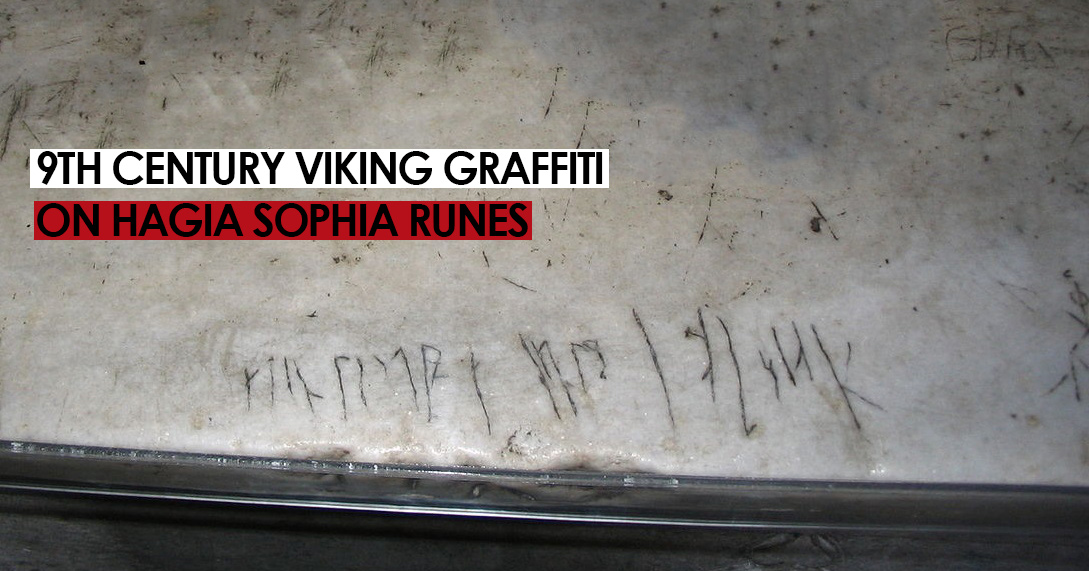
The Varyags of Miklagaard, also more commonly known as the Varangian Guard of Constantinople (hence the runic markings in Hagia Sophia). They were an elite unit that were the personal bodyguards of Byzantine Emperors from the 10th century, until their dissolution in the 14th century A.D.
Formation
Compromised at first of the Kievan Rus’ ancestors, they would later be of Norsemen origin, of Anglo Saxon as well as of Germanic origin. In service as early as the year 874, the Varangian Guard was formally constituted by Emperor Basil II in 988 A.D after the Christianization of Kievan Rus’ by Vladimir I of Kiev.
As Vladimir had acquired his power with the help of Varangian warriors, he would then lend 6.000 men to serve Basil II as part of a military assistance agreement, as the emperor began to mistrust his native Byzantine guardsmen whose allegiance shifted constantly.
That often resulted in assassinations of officials, so the Varangian Guard that was formed, consisted of gold paid mercenaries of Norsemen and Rus’ that had previously served in the Byzantine Army with deadly effectiveness and loyalty. Immigration from Scandinavia was so large to join the Varangian Guard that a law had passed in Vastergotland, Sweden, which prevented anyone from inheriting land at home had they served in the Byzantine Empire to deter future generations.
Effectiveness
As the Varangian Guard consisted as a unit in the Byzantine Empire, they were often deployed on the battlefields in wars, scoring crucial victories as they were usually deployed last due to their significance to the throne. In the writings of Anne Komneneas, her father Alexius I, seized the empire’s throne in 1081 and was specifically told not to anger or persecute the Varangian Guard, since even the slightest aim for that was as treason. Such attempts resulted in a swift and brutal execution. Swedish rune stones dotting the territorie, once held by the Byzantine Empire or today Sweden, exist even in modern day. 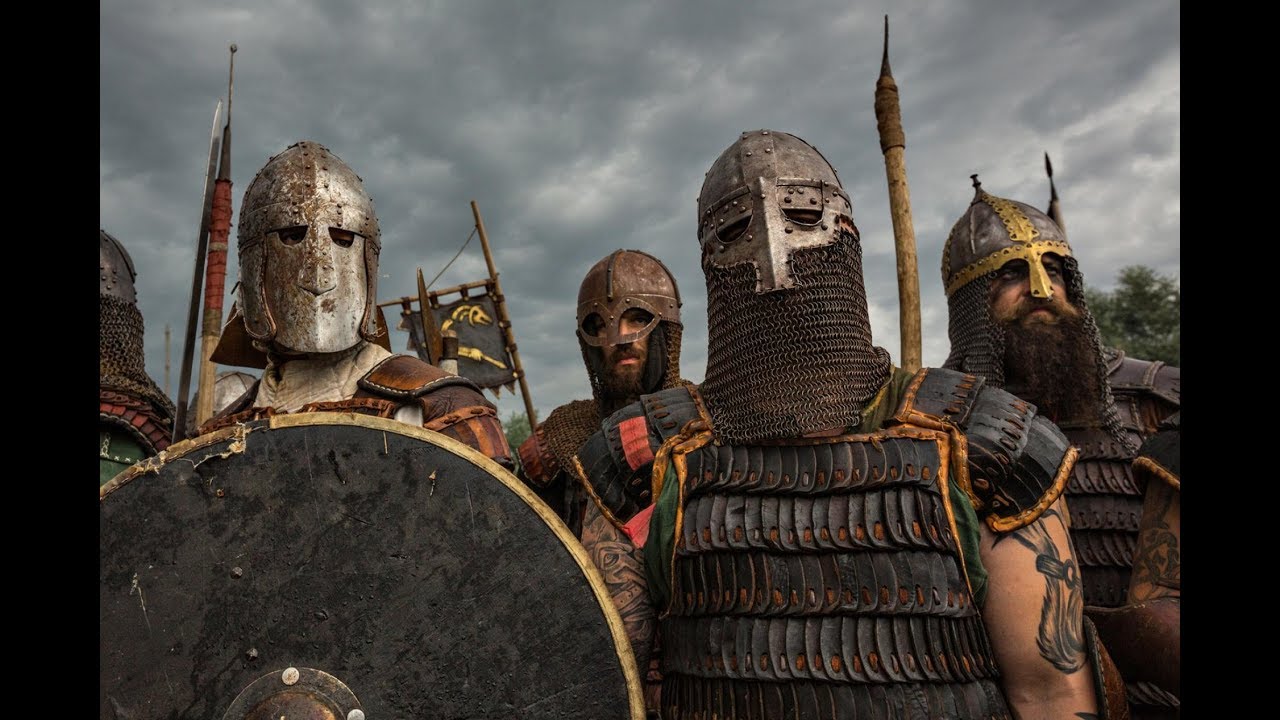
They usually tell the tale of a guard and were carvedin memory by those who returned home to tell their tales and adventures in servitude to Miklagaard. Although many called themselves the Varangian Guard even after the 12th century, what was once a Norsemen and Rus’ dominated elite unit, in time became filled with Anglo Saxons who lost their lands and services to their lords by the Viking raids and their Norman cousins. Thus, what was once pagan, became Christianized in servitude. Historical person of note in service of the Varangian Guard is Harald Hardrada, who later became King of Norway.

