


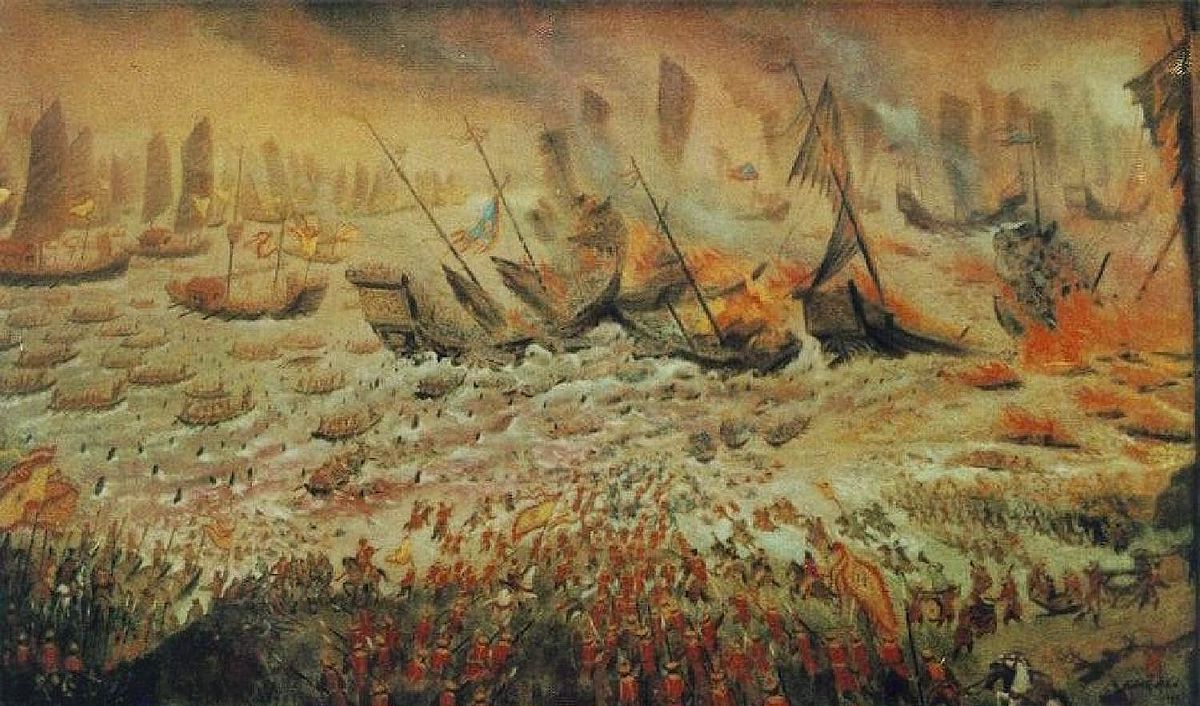
These five centuries mark the first vibrant era of Vietnamese independence. They include rule by three major dynasties, wars with China, and three gruesome but ultimately unsuccessful invasions by Mongol armies. Despite conflicts with the rulers of China, Sinitic culture continued to make inroads into Vietnam, just as classical Chinese remained the language of the elite throughout these years.
The Ly dynasty
The Ly dynasty came to power when Ly Công Uan (or Ly Thai-tô, 974–1028), commander of the palace guard, seized the throne. Raised by Buddhist monks and supported by the Buddhist establishment, he worked to create a close relationship with the clergy. He was also much influenced by traditional Chinese notions of kingship. He frequently remitted taxes in an effort to create better ruler-populace relations. The country became known as Dai Viêt.

Ly Phât Ma
Ly moved the capital to Thang-long (present Hanoi).1028–54. During the reign of Ly Phât Ma (or Ly Thai-tông, b. 1000), an apparently brilliant leader, Ly rule was regularized. He had six reign titles in 26 years. Through his constructive interaction with officials, they came to understand the relative importance of bureaucracy and the throne in institutional development. The Buddhist clergy entered an ever closer relationship with government, and Phât Ma became a patriarch of a Thiên sect himself. A new legal code was enacted in an effort to make the law more fair and put it in tune
with the times.

Ly Nhat Ton
A naval expedition by sea was led by Phât Ma himself to Champa. Champa was defeated, and the war booty enabled the king to remit taxes.1054–72. The reign of Ly Nhat Ton (or Ly Thanh-tông, b. 1023) continued the policies and institutional arrangements put in place by his father. He began to adopt many of the ritual trappings of a Chinese-style emperor, which worried the Song court to the north. Nhat Ton repeated his father’s expedition to Champa, this time sparing the life of the Champa king.
Ly Can Duc
At the time of Nhat Ton’s death and the accession of Ly Can Duc (1066–1127), Wang Anshi was in the midst of implementing his New Laws in China (See 1069–73). Among them was a vigorous response to border encroachments by China’s neighbors, and Ly attempts at such provoked him. Vietnamese troops attacked (1075), defeating Song naval forces and sacking several sites. The first examinations for recruitment to bureaucratic office were implemented but were abandoned soon thereafter. A national college was allegedly founded (1076) for the best scholars of the land. The Song sent a military force south but reached no conclusive victory; after several years of talks, borders were determined. Ly Can Duc’s death without an heir left the succession problematic. Maternal clansmen
of the crown placed “kings” on the throne, but they tended to be little more than nominal rulers. Civil wars wracked the country for much of the 12th century.
Religion and its part of Vietnamese Society
Buddhism became an essential component of traditional Vietnamese kingship, as the throne and the clergy developed an intricate, symbiotic relationship. Confucianism, too, made inroads into elite society. Scholars wrote commentaries on the Chinese classics, and those texts became the basis for the state examinations. Native Vietnamese “deities” also became associated with the throne.

The Trân dynasty
The Trân dynasty came to power in the decay and strife at the end of the Ly. The last queen of Ly was from the Trân family. Thereafter, the Trân took queens only from its own family. Collegial rule among senior Trân men, with royal abdication on the death of a predecessor, became the rule. Trân family members were given local prerogatives in political and economic control that enabled them to gain control through hegemony over the Red River plain. As with the Ly, the royal family was made up of pious Buddhists. The Trân inaugurated an examination system to recruit civil servants into government service. The curriculum was Chinese classical lore. This fostered the slow emergence of a Confucian literati among scholar-officials, much as earlier in China, in tandem with the centralizing policies of the throne. Military service became compulsory for every able-bodied man; and this had a salutary effect on the fighting prowess of the Vietnamese army.

